Showing posts with label celebrity tattoos. Show all posts

Monday, August 29, 2011

celebrity tattoos

images celebrity tattoos
celebrity tattoos
celebrity tattoos
celebrity tattoos
celebrity tattoos
celebrity tattoos
celebrity tattoos
celebrity tattoos
celebrity tattoos
celebrity tattoos
celebrity tattooscelebrity tattoos
celebrity tattoos
celebrity tattoos
celebrity tattoos
celebrity tattoos
celebrity tattoos
celebrity tattoos
celebrity tattoos
celebrity tattoos
celebrity tattoos
celebrity tattoos

Saturday, August 20, 2011

Celebrity Ink - Ewan McGregor

Ewan McGregor has only one tattoo, a heart and dagger tattoo on upper right arm with the names of his wife, Eve and daughters, Clara and Esther.


Monday, August 15, 2011

Tattoos From Mummies to Today


In the past, residents of the South Pacific used tattoos as a way to mark their skills. Tattoos were also used commonly to keep away evil spirits and illness. Tattoos were seen on fingers and on the wrist, as well as featured prominently on the face and neck. Tattoos have also been used to designate membership in a society as well. 

Along the way, Japan also began to use of tattoos as well. The Japanese people used tattoos for religious and ceremonial rites. Tattoos were seen in the western regions as well, although they certainly weren’t well accepted at first. 

Beginning in the late 1960s, tattoos really began to become popular again. What we are seeing today is a tattoo renaissance which has taken its inspiration from places such as the South Pacific, Thailand and Japan and raised the practice in the Western hemisphere to advanced artistic heights. 

No longer are people content with walking into a studio and choosing some stock 'flash' design off the wall, with little regard to its placement of their bodies. Gone are the days of reckless abandon in choosing a tattoo. 

Modern tattoo artists no longer see the human body as a blank sheet of paper that they can draw on and toss away. Tattoo artists are not willing today to place dull lifeless designs in a seemingly haphazard way, but they tend to treat the body as a three-dimensional canvas onto which each tattoo is placed, to live in balance with the body and existing tattoos. 

There are millions of stock flash designs out there for tattoos " including different color combinations that have helped to make tattoos the phenomenon they are today. Tattoo artists today commonly use the stock flash as a base from which to add their own artist's spin. 

Today tattoos are more common than ever, particularly small tattoos. Men and women alike have tattoos, some small tattoos, some large tattoos encompassing their entire body. There are many positive things about tattoos, but there can also be some negative things as well. 

Most people who decide to get tattoos today choose them for their symbolic meaning, as well as the beauty. Although there are still a few people who get tattoos strictly based on what they look like, some of those people tend to regret their choice of tattoo later on in their life. 


Caring For Your Tattoos


Leave bandage on for at least four hours, overnight if you received the tattoo late before your sleeptime. Make sure you can wash your tattoo when you remove the bandage. Handwash it, no cloths or sponges, using warm water & soap. Use water to soak off any of the bandage that sticks. Do not Rebandage. Wash tattoo at least twice a day while it is healing. Let tattoo dry out for one day, you may wash it to keep it clean during this time, After, start applying skin/hand conditioning lotion or lightly massage A&D ointment into tattoo.


Some people have been known to develop an allergy to Bacitracin, Triple antibiotic and other ointments may contain it. We do not recommend it. Nor do we recommend plain Vaseline. Lotions are safest in warm weather. Keeping it moist will speed the healing process, but your tattoo needs to breathe. Heavy application of petroleum based ointments can suffocate the tattoo and cause a rash. You can wet your tattoo, but don’t soak in the tub or shower for a long time while it is healing.

If you work under very dirty conditions or have to wear tight clothes, you can tape dry papertowel over your tattoo. Try to wear loose clothing around your tattoo. It is normal for your tattoo to flake off tiny pieces of colored skin while it is healing, but you don’t want to force it. So…Do not ever rub or scratch or pick your tattoo! you can smack it if it itches too much.


Wash your tattoo more often if you work near grease, chemicals, dirt, or if you got your tattoo in or near a high-bacteria area such as the armpit, buttocks, or genitals. Do not expose tattoo to chlorine, salt,alcohol or sun for 10 days. Careful with lotions containing excessive alcohol.


Only expose tattoo to long periods of sun after it is fully healed and then with a strong sunscreen applied, so as to protect it from the fading effects of radiation. Tattoos normally take 7-10 days to heal.


Necessary Steps for Getting A Tattoo


Obviously there is some concern about getting a tattoo because when you get a tattoo, you risk getting an infection, pain and wonder about the possibilities of infectious diseases. The process needs to be better understood.

1. Can I Get Infectious Diseases From Tattoo Needles?

There has been some concern recently regarding transmittable diseases (particularly Hepatitis-B and AIDS [HIV]) and tattoo shops. Just as in a dentist’s office, as long as the area is strictly sanitized, your chances for infection will be greatly reduced.

2. Can I Get Aids From Tattooing?

When needles are passed from IDU to IDU and reused without sterilization, some of that blood remains in the syringe and is passed on to the next user. If infected blood is passed, the recipient can become infected with HIV, which leads to AIDS.

Tattooing is VERY different from injecting drugs. The needles used in
tattooing are not hollow. They do, however, travel back and forth
through a hollow tube that acts as an ink reservoir. The tip of the tube is dipped into the ink, which draws a little into the tube.

3. Can My Tattoo’s Get Infected?

Not as long as you take care of your new tat. There is a section in the Ebook that covers healing methods in depth. Some people have trouble healing tattoos with colors they are allergic to.

4. What Are Some Bad Things For My New Tattoo?

Once it is healed, there is very little that will screw up a tattoo. The one exception is prolonged exposure to sunlight. (the other is scarring, but that is patently obvious).

Well, unfortunately it is. The newer inks are better at resisting fading
but whatever you do, if you spend lots of time in bright sunlight your
tats will fade (over a lifetime, not over a week). Best to try and keep
them out of bright sunlight.

No one wants to become a cave dweller just to keep their tats looking good, so just use some common sense. Think of your tat as an investment–slather on that sunblock so it doesn’t turn into a dark blob.

Tattoo art has become very popular and people are getting tattoo’s for lots of reasons. Taking good steps in choosing the right tattoo, getting it applied properly and with the proper care is probably the most important things to consider when thinking about getting a tattoo. Read all you can about tattoo art safety and when you’re ready to get your tattoo, you will feel much better about your decision!


About Tribal Tattoos


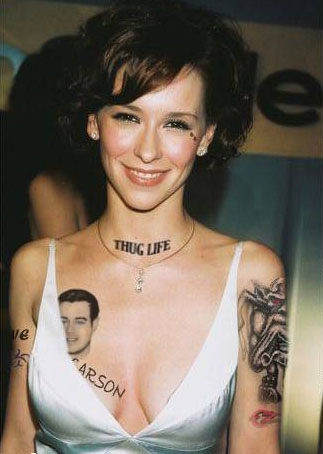
The tribal style of tattoos comes from the older tribes such as the Celtics (Ireland, Scotland, & Wales), Maori Tribe (indigenous people of New Zealand), The Haida Tribe (indigenous people along the west coast of North America), the Marquesan (Polynesian inhabitants of the Marquises Islands) and the tribes of Borneo. Native Americans also used tattoos to denote rank, wealth, tribe affiliation, family, role in society and deeds of bravery.


Celts

The Celts were a proud, warrior class who inhabited the English Isles before the Roman invasion 55 B.C. under Julius Caesar. The Celts were such a pain in the rear that the Romans built the Hadrian Wall to keep them away. But I digress; the endless knots inside and out of the outlines identify the Tribal tattoos of the Celtics.

Maori

The Maori tribes migrated from Eastern Polynesia around 800 to 1300 AD and were the first settlers in New Zealand. They developed their own language. The Maori were described as a fierce and proud warrior race. Inter-tribal warfare was a way of life, with the conquered being enslaved or in some cases eaten! The British exempted the Maori from conscription in WW2. But over 17,000 Maori Natives volunteered! The traditional Maori tribal tattoos are known as ta moko, and consisted of bold spiral designs covering the face. The tattooing process was a tribal ritual that made the use of bone chisels for tattooing. All I can say is this has got to hurt!

Haida

The Haida are North American Indians who were expert fishermen and seafarers who lived along the coast of British Columbia and Alaska. These people are well known as skilled artisans of wood, metal and design. They were also known as fearsome warriors who kidnapped slaves as far south in California. The Tribal tattoos of the Haida resembled pictures of the Indian astrology, thunderbirds, beavers, bears, and fish. The tattoo style of the Haida is forceful and masculine.

Marquesan

Sea-faring Polynesians from Samoa colonized the Marquises Islands as early as 300 A.D. They were warring tribes who sometimes cannibalized their enemies. The devastation of the native Marquesan occurred with the introduction of diseases from the European explorers. These islanders covered their bodies completely with tattoos. The Marquesan Islanders used their bodies as a living canvas that told picture stories.

Borneo

Borneo is the third largest island in the world. The rainforest of the Borneo Island is very rich in biodiversity. The tribes of Borneo used tattoos for protection and proof of their achievements. Needless to say, they were notorious as headhunters. Their tattoos usually took the form of scorpions, flowers, dogs, dragons and spirals.

Celebrities

The ex-professional boxer, Mike Tyson’s facial tattoo was influenced by a combination of the Maori and Borneo Tribal tattoos.

Sandra Bullock has a Tribal tattoo design below her navel.

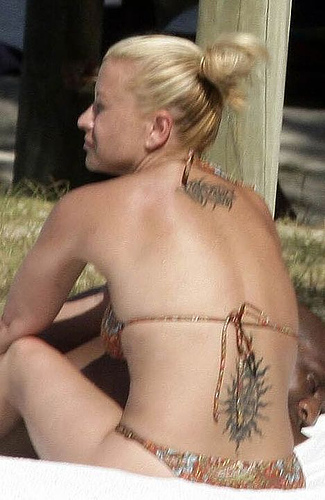
Pamela Anderson of Bay Watch fame, has a few tattoos, including a Tribal design on her lower back.

Conclusion

The vivid pattern of the Tribal tattoo expresses personal freedom and uniqueness of the wearer. Tribal tattoos have a simple appeal that reinforces a positive feeling about ourselves and connects us to ancient mystery of the tribal rituals, which faded away with history.