Showing posts with label Tattoo Artist. Show all posts

Friday, September 2, 2011

Tattoo Art In the Philipines - Dutdutan


Dutdutan: (doot-doot-ahn) - a Tagalog word meaning to continually insert or jab.

Now on it’s 11th year, Dutdutan is now synonymous with tattoo art in the Philippines. At least that’s how a lot of tattoo enthusiasts in the country would like to view it.


For the 15,000 or so who congregated at the World Trade Center in Manila on August 26 and 27, the biggest tattoo show this side of the earth is also a definition of the alternative lifestyle that they have chosen.

But according to the organizers, tattoo art was not always part of the alternative scene. Native Filipinos have a rich history of tattoo art dating back to pre-colonial dates. In fact, when the Spaniards first got here, they were greeted with a heavily tattooed Visayan tribe and they called the islands “La Isla De Los Pintados” meaning the “Island of the Painted Ones.”


Christianity and western culture eventually supplanted that practice and not until we fast forward to the 90s do we see the rebirth of skin art.

The man and talent behind that is Ricky Sta. Ana, who started the yearly gathering with a small group of tattoo artists and customers. Eleven years later and supported by a major alternative lifestyle brand, Tribal Gear, the show has now taken on a bigger vision.

It is now a convention, known in the skin art circle around the world and they are even able to bring in the best tattoo artists from around the world to prove that. Underlying this achievement is the organizers’ cause to eliminate the stigma of skin art as taboo, since it has always appealed to the rebel crowd and the unconventional.


Body Jewelry for Sale at BodyCandy.com

Thursday, September 1, 2011

Tattoo Artist & Painter Cris Cleen (Short Documentary/Bio)

Cris Cleen is an American tattoo artist who specializes in custom tattoos and paintings.


A short documentary on tattoo artist and painter Cris Cleen.

Cris Cleen Works from Cris Cleen on Vimeo.


View more of Cris’s work at criscleen.com


Body Jewelry for Sale at BodyCandy.com

Wednesday, August 31, 2011

Tattoo Art by Jie Zi


Here's one the most amazing artists, incredible tattoo designs that comes with a signature style. Beijing based tattoo artist Jie Zi mind blowing designs is a rage everyone is talking about. Different, refreshing and unique, those are the words that can describe such creations.


Body Jewelry for Sale at BodyCandy.com

Monday, August 29, 2011

The Second Annual Wildwood Tattoo Beach Bash


The Second Annual Wildwood Tattoo Beach Bash (Atlantic City, New Jersey), presented by Rebel Image Tattoo, takes place Friday, September 9 through Sunday, September 11 inside the Wildwoods Convention Center Exhibit Hall – an event perfect for tattoo enthusiasts, as well as those interested in the unique art form of tattooing and body art design.


The Wildwood Tattoo Beach Bash will bring the body art community to the Wildwoods for a weekend full of events. The ‘bash’ will host major national tattoo artists, as well as activities including: tattoo contests, a traveling tattoo museum, seminars, art exhibits, door prizes and more. Celebrity tattoo artist Tim Hendricks from TLC's New York Ink will be in attendance at the event.

It all comes down to who is going to be there. The Wildwood Tattoo Beach Bash has confirmed that many great names in the industry will be in attendance. Philadelphia Eddie (Crazy Eddie) very well known in the Wildwood are, and also world famous, will be at the show signing his books, Eddie is an Icon within the industry.

Tim Hendricks of Saltwater Tattoo who is a celebrity artist on TLC's NY Ink and he'll be tattooing on a walk-up basis. Also tattooing at the convention will be Bob Tyrrells out of Detroit. Bob Tyrrells has done work on Kid Rock, and is a highly esteemed traveling artist who previously worked under the legendary Tom Renshaw. When asked by bikeweek.com about rumors that Corey Miller might show, Siderio declined to confirm or deny the possibility.

Also, be sure to check out the rarely seen Japanese Hand Method of Tebori Tattooing on display. Hours for the Wildwood Tattoo Beach Bash are: Friday, September 9 – Noon-10 p.m.; Saturday, September 10 – 10 a.m. -10 p.m.; and Sunday, September 11 – 10 a.m.-6 p.m.

The Wildwood Convention Center is located at 4501 Boardwalk in Wildwood, New Jersey.

*** Artists who plan to attend can register by contacting Mike at wildwoodtattoobeachbash@comcast.net


Body Jewelry for Sale at BodyCandy.com

Friday, August 26, 2011

Frankie Oneshot - Oneshot Ink

Oneshot Ink

Frankie started tattooing full-time in Nov. 2009 at a shop in Queens NY.


"I am pretty much self-taught, kinda just picked up machine and went
to work..." Frankie Oneshot

About Frankie

Frankie has had the confidence to be proud and open about his work.


Frankie: "A friend of mine gave me my first machine, I had it about 2 yrs before I went out and bought the rest of equipment to start tattooing. I started getting tattooed at age 15 when it was still underground and illegal in nyc, pretty much fell in love with the art at that point.


"I started getting heavily tattooed around the age of 17. I always enjoyed watching the process of getting tattooed and pretty much went from there. I have been drawing my whole life but since age of 12 I got into electrical work, after school and shit at first, and then full time."


By the age of 17 I was a foreman and by age of 21 I was a project manager. I was so spoiled at my company, got what I wanted when and how I wanted it... The money was crazy but I always felt something was missing. In 2008 I started tattooing myself and friends, like a whenever I had time kinda thing.


In November 2009 one of my best friends and owner of the electrical company I was working with passed away, and at that time we closed company. I had 100's of offers to go and do electrical work and just didnt wanna do it anymore, so I said fuck it and started tattooing full time. A friend of mine and tattoo artist at the time saw talent and allowed me work in his shop.


I worked there for about 7 months and left to go work at another shop.
Worked there about 2 months with the intention on moving to Florida and work at a tattoo shop. Then out of nowhere I was confronted with the opportunity to buy the shop I was working at, and here I am. Took over the shop in November 2010 and went crazy getting it to be what I wanted it to be..."


Frankie worked hard to rebuild the shop and show that finally quality work is being done at the location.


Frankie: "The shop before was putting out horrible work, so it was killa
trying to re-build location. But I did what I had to and now people are coming to really take to my work..." I have the satisfaction of seeing my work out there and proudly say I did that piece.


I have only worked 1 convention so far which was Inkfest Live in Charlotte, N.C. February of this year and will be doing another convention with them again in Washington D.C. in November later this year. This time I plan on entering a few pieces for contest and hopefully I will be able to walk away with my 1st trophy... We shall see..."


"As far as my nickname "Oneshot" it comes from when I was younger it was a nickname I was given from fighting and I just kept it... Now less then a year into this I own my own shop "Oneshot Ink" in Richmond hills, N.Y."


"I couldnt be happier with my decision to become a tattoo artist... It has definitely been a struggle, but im in it cause I fuckin love it..."

Frankie Oneshot


Frankie keeps it real by being open about the amount of time he has invested as a tattoo artist which in my opinion gives customers the confidence to trust him, not only because of his honesty but by looking at his awesome work as well.


Oneshot Ink is located at: 113-18 Atlantic Avenue, Richmond Hill, N.Y. 11419
Phone: 718.312.9399
Hours: Tuesday - Sunday 12:00 p.m. to 11:00 p.m.
Email: oneshot104@aol.com

Visit the website: www.OneshotINK.com


Body Jewelry for Sale at BodyCandy.com

Monday, August 15, 2011

Tattoos From Mummies to Today


In the past, residents of the South Pacific used tattoos as a way to mark their skills. Tattoos were also used commonly to keep away evil spirits and illness. Tattoos were seen on fingers and on the wrist, as well as featured prominently on the face and neck. Tattoos have also been used to designate membership in a society as well. 

Along the way, Japan also began to use of tattoos as well. The Japanese people used tattoos for religious and ceremonial rites. Tattoos were seen in the western regions as well, although they certainly weren’t well accepted at first. 

Beginning in the late 1960s, tattoos really began to become popular again. What we are seeing today is a tattoo renaissance which has taken its inspiration from places such as the South Pacific, Thailand and Japan and raised the practice in the Western hemisphere to advanced artistic heights. 

No longer are people content with walking into a studio and choosing some stock 'flash' design off the wall, with little regard to its placement of their bodies. Gone are the days of reckless abandon in choosing a tattoo. 

Modern tattoo artists no longer see the human body as a blank sheet of paper that they can draw on and toss away. Tattoo artists are not willing today to place dull lifeless designs in a seemingly haphazard way, but they tend to treat the body as a three-dimensional canvas onto which each tattoo is placed, to live in balance with the body and existing tattoos. 

There are millions of stock flash designs out there for tattoos " including different color combinations that have helped to make tattoos the phenomenon they are today. Tattoo artists today commonly use the stock flash as a base from which to add their own artist's spin. 

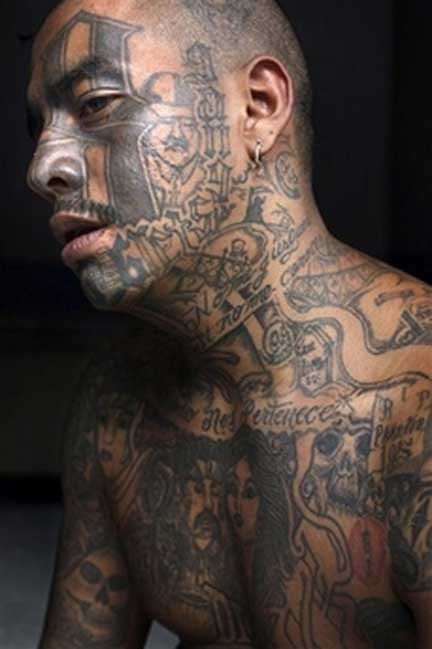
Today tattoos are more common than ever, particularly small tattoos. Men and women alike have tattoos, some small tattoos, some large tattoos encompassing their entire body. There are many positive things about tattoos, but there can also be some negative things as well. 

Most people who decide to get tattoos today choose them for their symbolic meaning, as well as the beauty. Although there are still a few people who get tattoos strictly based on what they look like, some of those people tend to regret their choice of tattoo later on in their life. 


Caring For Your Tattoos


Leave bandage on for at least four hours, overnight if you received the tattoo late before your sleeptime. Make sure you can wash your tattoo when you remove the bandage. Handwash it, no cloths or sponges, using warm water & soap. Use water to soak off any of the bandage that sticks. Do not Rebandage. Wash tattoo at least twice a day while it is healing. Let tattoo dry out for one day, you may wash it to keep it clean during this time, After, start applying skin/hand conditioning lotion or lightly massage A&D ointment into tattoo.


Some people have been known to develop an allergy to Bacitracin, Triple antibiotic and other ointments may contain it. We do not recommend it. Nor do we recommend plain Vaseline. Lotions are safest in warm weather. Keeping it moist will speed the healing process, but your tattoo needs to breathe. Heavy application of petroleum based ointments can suffocate the tattoo and cause a rash. You can wet your tattoo, but don’t soak in the tub or shower for a long time while it is healing.

If you work under very dirty conditions or have to wear tight clothes, you can tape dry papertowel over your tattoo. Try to wear loose clothing around your tattoo. It is normal for your tattoo to flake off tiny pieces of colored skin while it is healing, but you don’t want to force it. So…Do not ever rub or scratch or pick your tattoo! you can smack it if it itches too much.


Wash your tattoo more often if you work near grease, chemicals, dirt, or if you got your tattoo in or near a high-bacteria area such as the armpit, buttocks, or genitals. Do not expose tattoo to chlorine, salt,alcohol or sun for 10 days. Careful with lotions containing excessive alcohol.


Only expose tattoo to long periods of sun after it is fully healed and then with a strong sunscreen applied, so as to protect it from the fading effects of radiation. Tattoos normally take 7-10 days to heal.


Necessary Steps for Getting A Tattoo


Obviously there is some concern about getting a tattoo because when you get a tattoo, you risk getting an infection, pain and wonder about the possibilities of infectious diseases. The process needs to be better understood.

1. Can I Get Infectious Diseases From Tattoo Needles?

There has been some concern recently regarding transmittable diseases (particularly Hepatitis-B and AIDS [HIV]) and tattoo shops. Just as in a dentist’s office, as long as the area is strictly sanitized, your chances for infection will be greatly reduced.

2. Can I Get Aids From Tattooing?

When needles are passed from IDU to IDU and reused without sterilization, some of that blood remains in the syringe and is passed on to the next user. If infected blood is passed, the recipient can become infected with HIV, which leads to AIDS.

Tattooing is VERY different from injecting drugs. The needles used in
tattooing are not hollow. They do, however, travel back and forth
through a hollow tube that acts as an ink reservoir. The tip of the tube is dipped into the ink, which draws a little into the tube.

3. Can My Tattoo’s Get Infected?

Not as long as you take care of your new tat. There is a section in the Ebook that covers healing methods in depth. Some people have trouble healing tattoos with colors they are allergic to.

4. What Are Some Bad Things For My New Tattoo?

Once it is healed, there is very little that will screw up a tattoo. The one exception is prolonged exposure to sunlight. (the other is scarring, but that is patently obvious).

Well, unfortunately it is. The newer inks are better at resisting fading
but whatever you do, if you spend lots of time in bright sunlight your
tats will fade (over a lifetime, not over a week). Best to try and keep
them out of bright sunlight.

No one wants to become a cave dweller just to keep their tats looking good, so just use some common sense. Think of your tat as an investment–slather on that sunblock so it doesn’t turn into a dark blob.

Tattoo art has become very popular and people are getting tattoo’s for lots of reasons. Taking good steps in choosing the right tattoo, getting it applied properly and with the proper care is probably the most important things to consider when thinking about getting a tattoo. Read all you can about tattoo art safety and when you’re ready to get your tattoo, you will feel much better about your decision!


Ways of Removing Tattoos


The area to be treated is frozen and then the skin where the tattoo is located is rubbed or scratched with a rotary abrasive brush or diamond fraise. It removes the top few layers of skin and finally tattoo is removed as the sanding goes deeper into the skin. The procedure is very painful and often turns out to be ineffective as it causes the skin to bleed and may leave a scar. There is always the risk of infection. 


Salabrasion 

Salabrasion is a centuries-old technique. Anesthetic is used to numb the area to be treated. Then salt-water solution is applied onto the tattoo. The area is then abraded with a tool similar to what is used in the dermabrasion procedure. The method is effective only in the case of superficial tattoos and requires multiple treatments. This technique is successful only in fading the tattoo and not completely removing it. 

Excision 

Anesthetic is injected, and the tattoo is cut out of the skin using a scalpel. Thereafter the surrounding skin is sewn back together. The procedure is ideal for smaller tattoos only. Though large tattoos can also be removed but then skin grafts are often required for large tattoo removal. People who undergo this procedure are extremely prone to infection and scarring. 

Cover-Ups 

In this method, old tattoo is replaced by a new tattoo. Some people prefer covering-up of their tattoo rather than removing tattoos completely as covering-up tattoo is comparatively less painful, inexpensive and doesn't take several months to treat. Some skilled tattoo artists even specialize in cover-ups and provide excellent results. However you have limited options in cover-ups. The biggest disadvantage of this method is that cover-up tattoos can be done only once. 

Tattoo Removal Creams 

A tattoo removal cream is the most inexpensive way to remove a tattoo yourself. Market is flooded with several creams such as TatBGone and Tattoo-off that claim to be effective in fading tattoos. There are claims that these creams may fade a tattoo after a continuous use of several months but their success at removing a tattoo altogether is highly unlikely. 

Saline Tattooing 

In this procedure, tattoo artists fade a tattoo by tattooing lidocaine and saline solution over unwanted tattoo. This is beneficial for older tattoos. This process can just lighten the existing tattoo but can't remove it altogether. This procedure is relatively harmless and cheaper. Though finding a tattoo artist to perform this task is difficult. 

Laser Tattoo Removal 

Laser tattoo removal is considered as the best method among all to get rid of unwanted tattoos. Although it is costly and requires multiple sessions, but at the end of the day it ensures that the process is relatively painless and bloodless. In this procedure, targeted tattoo is exposed to the intense pulses of light delivered by laser. This laser energy results in destruction of the ink pigment while ensuring minimum damage to the surrounding skin. 

The popularity of laser tattoo treatment is skyrocketing and lots of people are turning to this reliable method of tattoo removal.


Methods of Tattoo Removal


Luckily, there are several successful ways to remove tattoos, which are being used by physicians. Nevertheless, in most cases some blemishes can remain visible on the skin. It depends on a number of factors such as size, location, and the time taken in the individual healing process. If the tattoo has been on the skin for a long time, then it may be difficult to remove. 


The physician will choose a tattoo removal method after considering the size and length of the tattoo. He will also take into consideration the time that the tattoo has been on the skin. 

Some of these widely used tattoo removal methods include: 

Excision: This is one of the most popular tattoo removal methods, especially when the tattooed area is small. By using this method, tattoos can be removed completely from the skin. In order to remove large tattoos, the excision process is done in stages. 

While performing this method, the tattooed area is first numbed, and then it is erased surgically. There may be minimal bleeding, but it can be controlled easily by using electrocautery. 

Dermabrasion: Another tattoo removal procedure is known as the Dermabrasion Procedure”. The tattooed area is sprayed with a solution to freeze it, and then the tattoo is rubbed down with a rotary abrasive tool, which results in the peeling of the skin. During this process, bleeding may occur, so it is a must that immediate dressings are applied to that area. 

Laser: Nowadays, the laser technique is becoming popular among physicians, as it offers better results in a short time. Laser techniques such as Q-switched Nd: Yag, Q-switched Alexandrite and the Q-switched Ruby, are being used to remove tattoos. 


A cream can be applied on the skin for numbing before the treatment begins, if required. After that, by using laser light technique, the pigment of the tattoo is broken and thereafter several weeks, scavenger cells of the body eliminate the treated pigment area. Generally, one may be required to have more than one laser treatment to erase the tattoo entirely. 

Salabrasion: This is an ancient method to remove tattoos, but it is still used sometimes. Similar to other methods, anesthetic is used on the tattoo as well as on its surrounding area. After that, a solution of normal tap water and salt is applied on the skin. By using abrade equipment, the tattooed area is abraded strongly, and when the area becomes dark red, then a dressing is applied. 

In conclusion, it does not matter which tattoo removal method you opt for, but one thing is definite - there will always remain some scarring or color variation. 


About Tribal Tattoos


The tribal style of tattoos comes from the older tribes such as the Celtics (Ireland, Scotland, & Wales), Maori Tribe (indigenous people of New Zealand), The Haida Tribe (indigenous people along the west coast of North America), the Marquesan (Polynesian inhabitants of the Marquises Islands) and the tribes of Borneo. Native Americans also used tattoos to denote rank, wealth, tribe affiliation, family, role in society and deeds of bravery.


Celts

The Celts were a proud, warrior class who inhabited the English Isles before the Roman invasion 55 B.C. under Julius Caesar. The Celts were such a pain in the rear that the Romans built the Hadrian Wall to keep them away. But I digress; the endless knots inside and out of the outlines identify the Tribal tattoos of the Celtics.

Maori

The Maori tribes migrated from Eastern Polynesia around 800 to 1300 AD and were the first settlers in New Zealand. They developed their own language. The Maori were described as a fierce and proud warrior race. Inter-tribal warfare was a way of life, with the conquered being enslaved or in some cases eaten! The British exempted the Maori from conscription in WW2. But over 17,000 Maori Natives volunteered! The traditional Maori tribal tattoos are known as ta moko, and consisted of bold spiral designs covering the face. The tattooing process was a tribal ritual that made the use of bone chisels for tattooing. All I can say is this has got to hurt!

Haida

The Haida are North American Indians who were expert fishermen and seafarers who lived along the coast of British Columbia and Alaska. These people are well known as skilled artisans of wood, metal and design. They were also known as fearsome warriors who kidnapped slaves as far south in California. The Tribal tattoos of the Haida resembled pictures of the Indian astrology, thunderbirds, beavers, bears, and fish. The tattoo style of the Haida is forceful and masculine.

Marquesan

Sea-faring Polynesians from Samoa colonized the Marquises Islands as early as 300 A.D. They were warring tribes who sometimes cannibalized their enemies. The devastation of the native Marquesan occurred with the introduction of diseases from the European explorers. These islanders covered their bodies completely with tattoos. The Marquesan Islanders used their bodies as a living canvas that told picture stories.

Borneo

Borneo is the third largest island in the world. The rainforest of the Borneo Island is very rich in biodiversity. The tribes of Borneo used tattoos for protection and proof of their achievements. Needless to say, they were notorious as headhunters. Their tattoos usually took the form of scorpions, flowers, dogs, dragons and spirals.

Celebrities

The ex-professional boxer, Mike Tyson’s facial tattoo was influenced by a combination of the Maori and Borneo Tribal tattoos.

Sandra Bullock has a Tribal tattoo design below her navel.

Pamela Anderson of Bay Watch fame, has a few tattoos, including a Tribal design on her lower back.

Conclusion

The vivid pattern of the Tribal tattoo expresses personal freedom and uniqueness of the wearer. Tribal tattoos have a simple appeal that reinforces a positive feeling about ourselves and connects us to ancient mystery of the tribal rituals, which faded away with history.